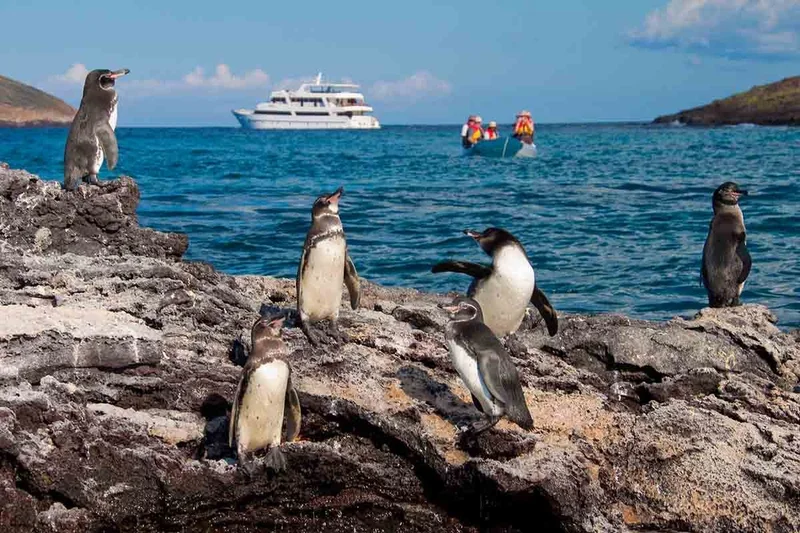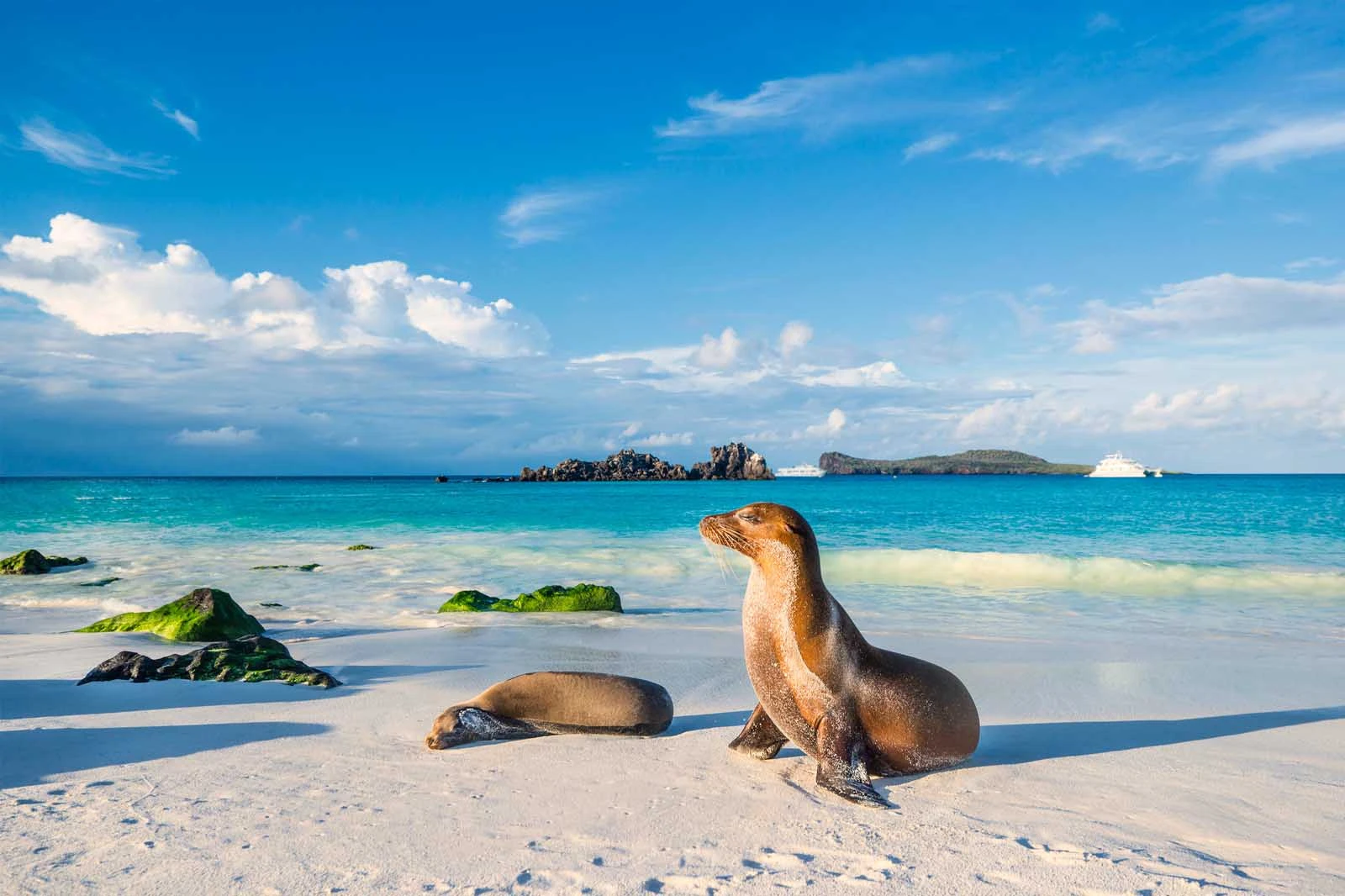
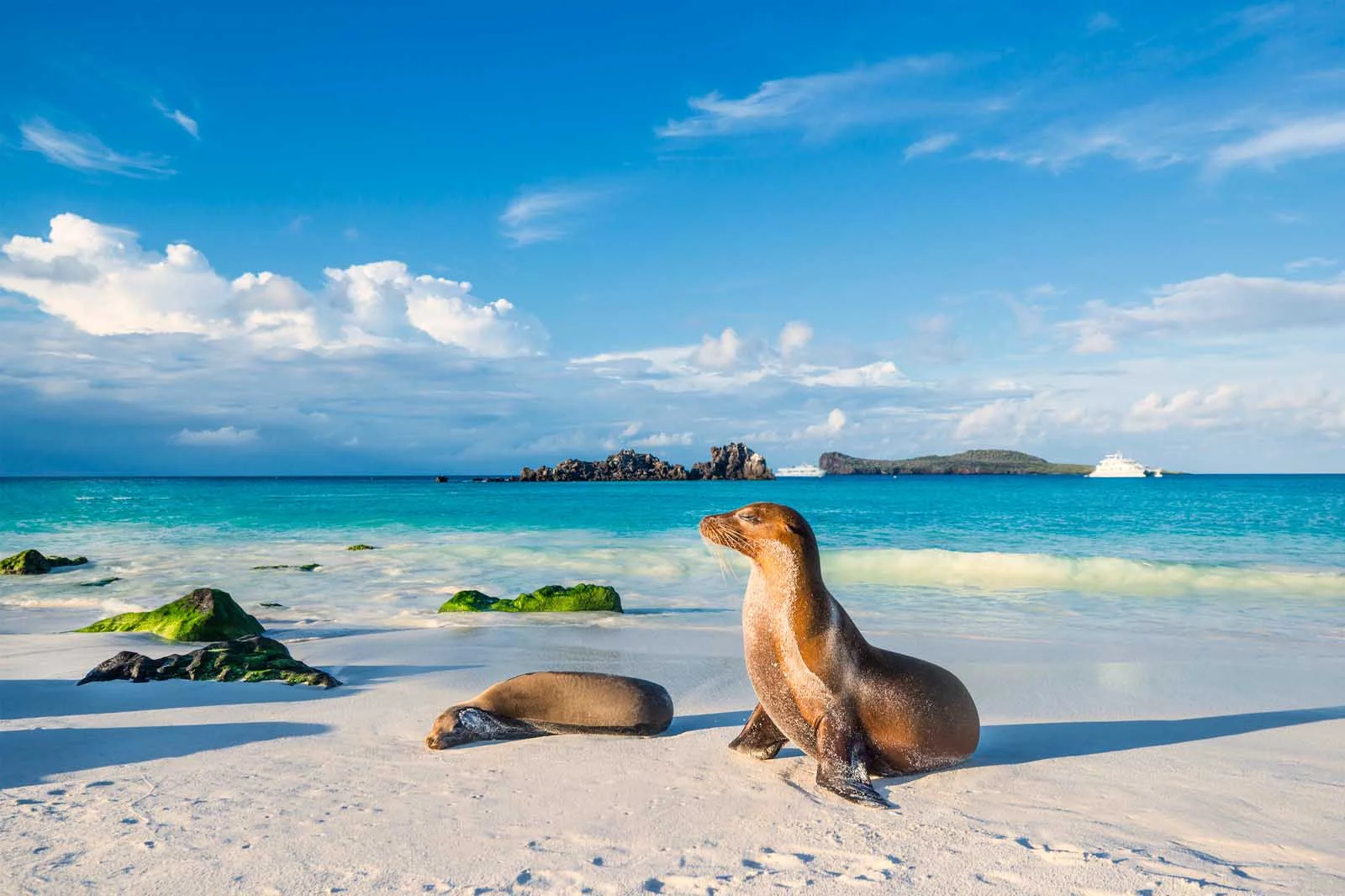
Five days, four nights, all land-based, with San Cristóbal as your base. Day trips run out to Española, Pitt Point and Kicker Rock aboard the Galapagos Hopper catamaran, and you sleep in a hotel on San Cristóbal every night rather than in a cabin. Good fit if you want the wildlife but not the confinement of a small ship, and if a short cruise would leave you feeling penned in.
Be honest with yourself about the format before you book. Sleeping ashore means a real bed and firm ground under you at night. It also means day boats to reach the outer sites, and a day boat on open water bounces. Prone to seasickness on a small, fast craft? Plan for it, bring medication, don't wing it. And if what you actually want is a full expedition cruise, this itinerary pairs with one - plenty of our guests do the land tour first, then step aboard a ship.
What it costs, roughly: The price covers inter-island transport, a bilingual naturalist guide, meals as listed, and hotels. It does not cover your flights, tips, snorkeling gear, or the two fees every visitor pays the moment they arrive. Budget for those first. The Galápagos National Park entrance fee is US$200 per foreign adult, cash, paid at the island airport, and there's a US$20 Transit Control Card you buy in cash at the Quito or Guayaquil airport before you fly - about US$220 in mandatory fees before you've done anything. The round-trip flight from the mainland runs roughly US$400-500 per person on top. Carry US dollars in small bills. Cash is the rule out here.
Is this the right trip for you - land tour or cruise?
Land tour or cruise - different trips, and it comes down to you. A land-based itinerary keeps you ashore on San Cristóbal at night and gets you to the outer sites by day boat. That works if you want a real bed, a fixed base, a flexible pace, or you just don't fancy sleeping on a small vessel. A cruise reaches far sites no day trip can touch and wakes you up somewhere new each morning. Neither wins. It's the guide and crew who make or break the experience, far more than the format. Still weighing it? [Browse our full range of Galápagos tours and cruises](/galapagos), filter by length and style, or tell us your interests and we'll build around them.
5 Day Galapagos Itinerary
Day 1: San Cristobal Island
The adventure begins the moment you land. Once you've cleared the National Park checkpoint at San Cristóbal airport, your naturalist guide meets you, and transport carries you up into the San Cristóbal Highlands.
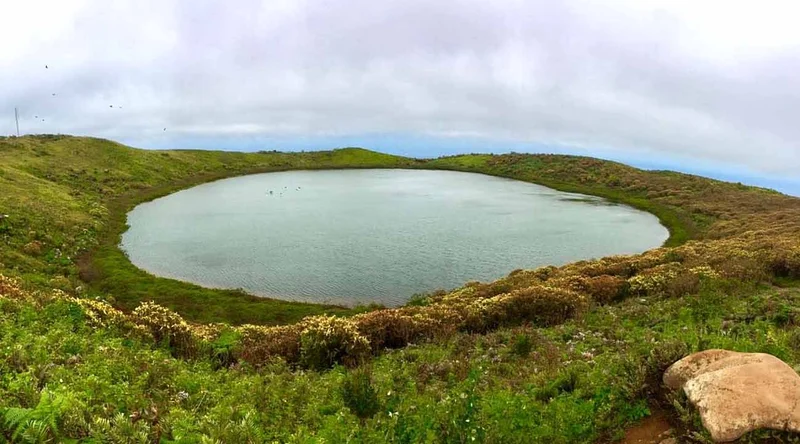
The Junco Lake or el Junco, as it is called by locals, is an inactive volcano that has a freshwater lake where frigate birds and Bahamas ducks rinse their wings from the salt. This will be our first approach to the amazing view of Galapagos and its wildlife. Here, we will have our first tasty lunch at the archipelago.
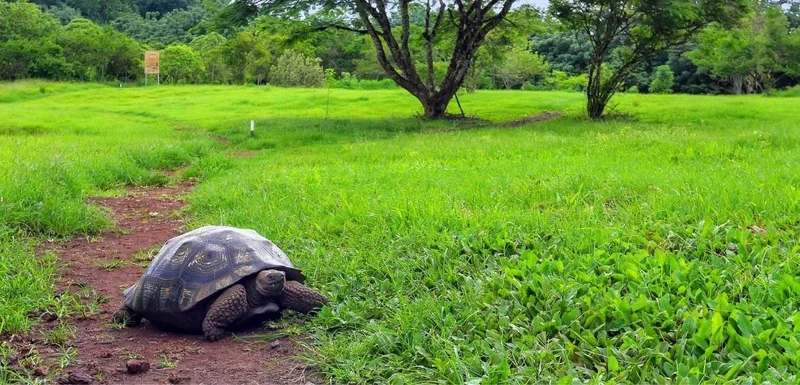
Moving on in our daily journey, after an approximate hike of 1 hour, we will have the opportunity to watch the famous Galapagos Giant Tortoises in their natural habitat. Where? At the Galapaguera Breeding Center. This center, run by the Galapagos National Park Authority, allows us not just to watch these great tortoises but also touch and see some of their eggs. This visit is ideal for understanding the behavior of this massive animal that may weigh up to 200kg (440 pounds) and live up to 150 years.
From the tortoises you head to Puerto Chino. Short walk in, a beach worth it, a good place to stretch out in the sun before the day winds down.
Then you check into your hotel. Rest, a good meal, end of a long day.
IMPORTANT NOTE: We strongly recommend to take the first flights to Galapagos because we will be able to land before midday and do all the program for this day.
One thing our advisors say over and over: a short Galápagos package burns real hours getting to and from the mainland, so Day 1 and Day 5 are mostly travel. Take an early flight over on Day 1. That's the difference between finishing the full program and losing your afternoon.
Overnight: San Cristobal Island
Meals: Lunch, Dinner
Day 2: Española Island: Gardner Bay & Suarez Point
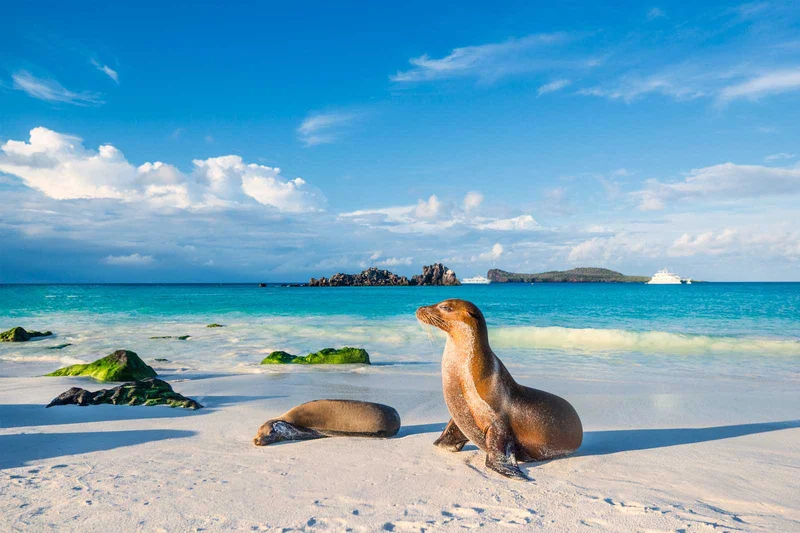
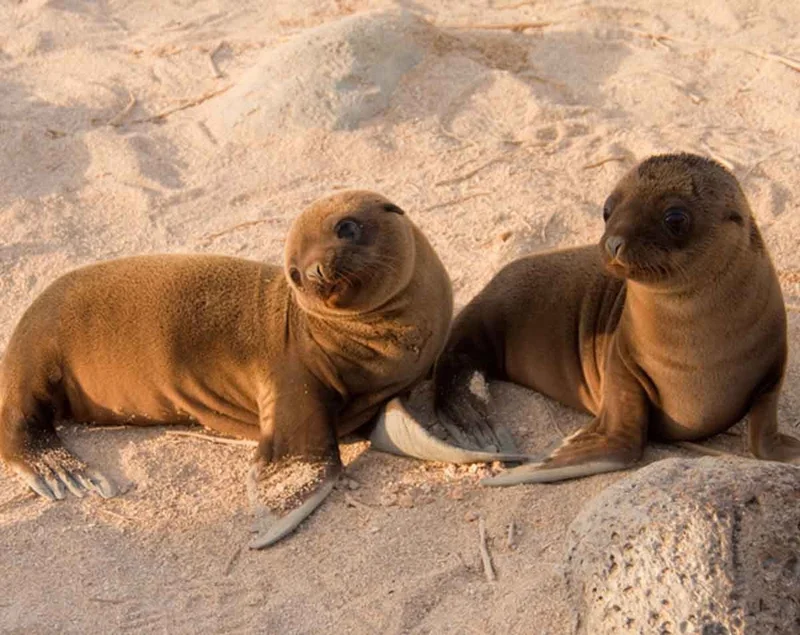
Española is one of the real shows of the archipelago, and a strong day if you snorkel or dive. Two sites. Gardner Bay first: turquoise water, sea lions that live right there, sharks, and something like 50 species of fish in the shallows.
Snorkel here and you may well end up swimming among hammerhead sharks. It's not just clear water and colorful fish, either - watch for the Galápagos hawk and Darwin's finches. Lunch is served on board, depending on the day's activities and the group. Then Punta Suárez.
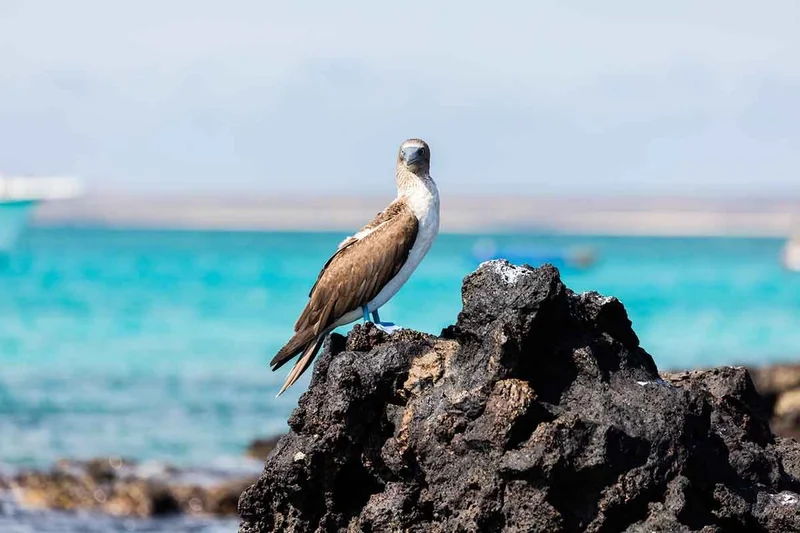
This rocky land requires a bit of effort by us, but firstly we have to wear comfy shoes or boots for being able to enjoy the 2 - 2:30 hours trail. Don´t worry! The effort will be more than rewarded. Here we will watch many species of birds like the blue-footed and red-footed boobies, hawks, finches and the Galapagos doves. If we are traveling between May and December, we will be able to see the albatross colony. At the end of it, there is another wonder of Galapagos waiting for us into the cliffs. There is the impressive blowhole of water that height up to 20m or more (50-75 ft). It like looking a geyser in the middle of the Pacific Ocean.
Overnight: San Cristóbal Island
Meals: Breakfast, Lunch, Dinner
Day 3: Pitt Point
Early start at Baquerizo Moreno Dock. Your bilingual guide helps you into the zodiac out to the Galapagos Hopper catamaran, a crossing of about two hours fifteen.
You come ashore with a wet landing at Golden Sand Beach - Playa Arena Dorada. Punta Pitt is an eroded volcano and one of the few spots in Galápagos where you can see all three booby species: blue-footed, red-footed and Nazca. The ground is rocky, so it's a two-hour hike and comfortable shoes matter. After that comes snorkeling off Pitt Islet, plenty of fish, and with luck a few sharks. Back aboard the Galapagos Hopper you're met with a snack, and lunch runs three courses, with soft drinks, coffee, tea and infusions on hand.
Meals: Breakfast
Day 4: Kicker Rock
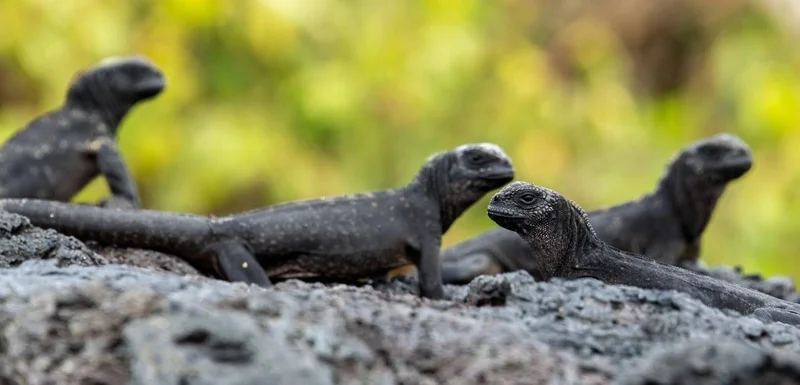
Another early start at Baquerizo Moreno Dock, into the zodiac and out to the Galapagos Hopper. You run along the west side of San Cristóbal, watching for frigatebirds and the marine iguanas you'll find nowhere else on earth. With a bit of luck, manta rays and dolphins keep pace with the boat.
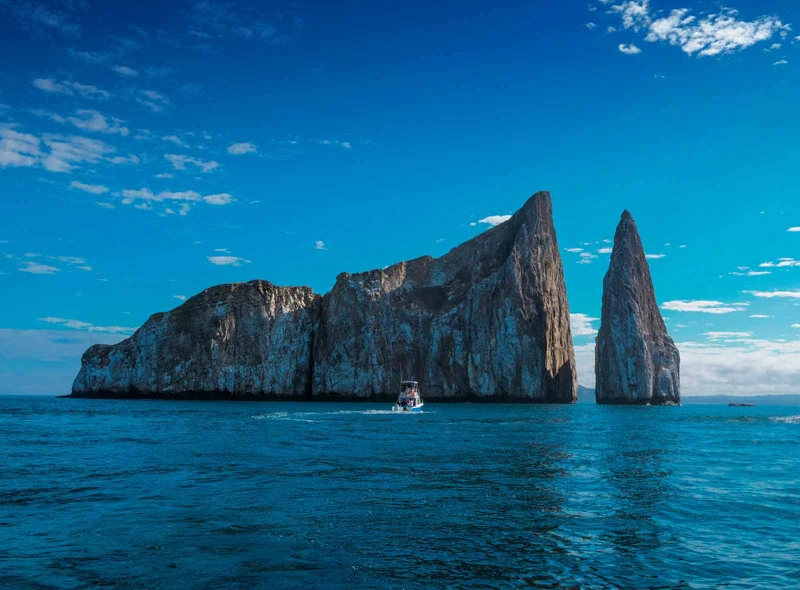
Our first snorkeling day trip will take place at Kicker Rock also known as the sleeping lion. This astonishing rock is a tuff cone eroded into twin peaks. There is large wildlife living in its surroundings, it's cliffs are home to blue-footed boobies and other seabirds. About sea life, some of the species that we can find at this place are sea lions, reef fish, rays, hammerhead shark, sea turtles and much more. For lunch, we will board again the Galapagos Hopper and will enjoy a succulent 3-course meal.
Soft drinks, coffee, tea and infusions are on board too. After Kicker Rock you disembark at the beach. Walk the shore in search of coastal birds and sea lions, or just take some sun. Go on foot and you'll see mangrove forest; then dip into that turquoise water before the catamaran carries you back to Baquerizo Moreno Dock in the afternoon.
Meals: Lunch
Day 5: Departure
And that's the trip. Your guide sees you to your return flight, or on to whatever comes next in Galapagos - ideally an expedition cruise.
5 Day Galapagos Itinerary Includes
- Inter-island transportation
- Bilingual tour guide
- Meals as detailed
- Hotels
5 Day Galapagos Itinerary Does not Include
- Tips
- Personal Expenses
- Airfare
- Aditional activities
- Snorkeling equipment
5 Day Galapagos Itinerary Highlights
- San Cristóbal's Junco Lake and the Galapaguera Breeding Center
- Snorkeling with sea lions and reef fish at Kicker Rock
- Española Island's Punta Suárez and Gardner Bay
- Pitt Point, with all three booby species and dramatic landscapes
Travel Tips
Extending your trip
We run our own offices in Ecuador and the Galápagos, so this land tour doesn't have to stand alone. A lot of guests add an expedition cruise afterward to reach the western and northern islands a day boat can't. Others tack on the Ecuadorian Amazon, or a few days in the Andes before they fly home. Want a longer trip built around this one? We design it end to end. The itinerary above is a starting point, not a ceiling.
More information about the Galapagos Islands you visit in this 5 day itinerary:
Frecuently Asked Questions
Is this a 4-day or 5-day Galápagos land tour?
Where do I sleep - on a boat or on land?
What does the price cover, and what will I pay on top?
Will I get seasick on the day boats?
When can I see the albatross colony on Española?
Do I need to book far ahead?
Why travel with us?
 Over 22 years of experience
%20--%3e%3csvg%20version='1.1'%20id='Layer_1'%20xmlns='http://www.w3.org/2000/svg'%20xmlns:xlink='http://www.w3.org/1999/xlink'%20x='0px'%20y='0px'%20viewBox='0%200%20512%20512'%20style='enable-background:new%200%200%20512%20512;'%20xml:space='preserve'%3e%3cg%3e%3cg%3e%3cpath%20d='M424.18,200.763c-1.558,0-3.124,0.043-4.685,0.125c-20.129-42.954-56.688-76.736-101.546-93.182V64%20c0-34.157-27.79-61.947-61.947-61.947c-34.157,0-61.947,27.79-61.947,61.947v43.707c-44.86,16.447-81.419,50.231-101.548,93.186%20c-1.56-0.083-3.125-0.129-4.685-0.129C39.396,200.763,0,240.16,0,288.583c0,5.633,4.566,10.199,10.199,10.199h66.648%20c4.678,39.071,21.888,74.34,47.486,101.669c-9.018,15.386-13.176,33.319-11.773,51.284c1.626,20.824,10.666,40.436,25.454,55.225%20c1.992,1.992,4.602,2.987,7.212,2.987s5.221-0.995,7.212-2.987l55.753-55.753c15.234,4.19,31.263,6.441,47.809,6.441%20c17.145,0,33.738-2.405,49.461-6.893l56.205,56.205c1.992,1.992,4.602,2.987,7.212,2.987c2.61,0,5.221-0.995,7.212-2.987%20c14.789-14.789,23.828-34.403,25.454-55.229c1.444-18.5-3.024-36.957-12.609-52.643c24.899-27.134,41.617-61.883,46.218-100.306%20h66.649c5.633,0,10.199-4.566,10.199-10.199C512,240.16,472.604,200.763,424.18,200.763z%20M75.551,277.199%20c0,0.397,0.012,0.789,0.015,1.185H21.168c4.765-31.266,31.086-55.537,63.273-57.134C78.68,238.873,75.551,257.677,75.551,277.199z%20M214.452,64c0-22.909,18.638-41.549,41.548-41.549S297.549,41.09,297.549,64v37.587c-13.345-3.157-27.253-4.835-41.549-4.835%20c-14.295,0-28.204,1.679-41.548,4.835V64z%20M120.411,362.142c-15.487-24.634-24.462-53.757-24.462-84.942%20c0.001-31.989,9.439-61.81,25.669-86.84l22.637,22.637c1.992,1.992,4.602,2.987,7.212,2.987s5.221-0.995,7.212-2.987%20c3.983-3.983,3.983-10.441,0-14.425l-24.755-24.756c29.381-34.641,73.201-56.669,122.075-56.669%20c48.875,0,92.694,22.028,122.075,56.669l-42.909,42.909l-68.966-39.817v-11.484c0-5.633-4.566-10.199-10.199-10.199%20c-5.633,0-10.199,4.566-10.199,10.199v11.484l-76.655,44.257c-3.156,1.822-5.1,5.188-5.1,8.833v88.508L120.411,362.142z%20M145.763,484.786c-15.009-20.324-17.359-47.248-6.136-69.797c14.036,11.873,29.899,21.646,47.107,28.826L145.763,484.786z%20M246.835,436.98c-45.946-2.606-86.773-24.675-114.332-58.082l42.362-42.362l71.97,41.552V436.98z%20M184.444,318.512v-82.625%20L256,194.574l71.556,41.313v82.625L256,359.825L184.444,318.512z%20M267.234,436.849v-59.957l69.244-39.979l42.545,42.545%20C351.888,412.049,312.077,433.724,267.234,436.849z%20M368.341,484.788l-41.594-41.594c17.233-7.373,33.095-17.35,47.087-29.439%20C385.773,436.55,383.627,464.09,368.341,484.788z%20M391.19,362.777l-43.236-43.236v-86.753l42.428-42.428%20c16.23,25.029,25.668,54.851,25.668,86.839C416.05,308.652,406.925,338.011,391.19,362.777z%20M436.434,278.384%20c0.003-0.396,0.015-0.789,0.015-1.185c0-19.522-3.129-38.326-8.891-55.949c32.187,1.597,58.508,25.869,63.273,57.134H436.434z'/%3e%3c/g%3e%3c/g%3e%3cg%3e%3cg%3e%3cpath%20d='M256,125.212c-5.633,0-10.199,4.566-10.199,10.199v2.07c0,5.633,4.566,10.199,10.199,10.199%20c5.633,0,10.199-4.566,10.199-10.199v-2.07C266.199,129.778,261.633,125.212,256,125.212z'/%3e%3c/g%3e%3c/g%3e%3cg%3e%3c/g%3e%3cg%3e%3c/g%3e%3cg%3e%3c/g%3e%3cg%3e%3c/g%3e%3cg%3e%3c/g%3e%3cg%3e%3c/g%3e%3cg%3e%3c/g%3e%3cg%3e%3c/g%3e%3cg%3e%3c/g%3e%3cg%3e%3c/g%3e%3cg%3e%3c/g%3e%3cg%3e%3c/g%3e%3cg%3e%3c/g%3e%3cg%3e%3c/g%3e%3cg%3e%3c/g%3e%3c/svg%3e "South America & Antarctica Specialists") South America & Antarctica Specialists
South America & Antarctica Specialists Set and Tailor-made packages
 The best last-minute cruise deals
%20--%3e%3csvg%20version='1.1'%20id='Capa_1'%20xmlns='http://www.w3.org/2000/svg'%20xmlns:xlink='http://www.w3.org/1999/xlink'%20x='0px'%20y='0px'%20viewBox='0%200%20489.679%20489.679'%20style='enable-background:new%200%200%20489.679%20489.679;'%20xml:space='preserve'%3e%3cg%3e%3cg%3e%3cg%3e%3cpath%20d='M487.768,218.844c-14.5-134.2-135.2-232-269.4-217.4c-72.9,8.3-137.4,47.8-179,109.2c-6.2,9.4-3.1,21.8,6.2,28.1%20s21.8,3.1,28.1-6.2c34.3-51,88.4-84.3,148.8-90.5c112.4-11.5,213.3,69.6,224.7,182c11.4,111.3-69.7,212.2-181,223.7%20c-74.7,7.9-147.5-26-189.5-86.8l39.7,8.7c10.4,2.1,21.8-4.2,23.9-15.6c2.1-10.4-4.2-21.8-15.6-23.9l-81.1-17.7%20c-17.3-2.2-23.9,10.4-25,15.6l-17.7,82.2c-2.1,10.4,4.2,21.8,15.6,23.9c13.6,1.1,21.8-7.3,25-16.6l6-27.1%20c89.3,115.2,214.6,98.9,222.9,97.9C404.568,473.744,502.368,353.044,487.768,218.844z'/%3e%3c/g%3e%3cg%3e%3cpath%20d='M171.168,268.944h-38l30.6-31.1c0.4-0.4,0.8-0.8,1.1-1.3c5.7-7.5,8.8-16.5,8.8-26c0-23.7-19.3-43-43-43s-43,19.3-43,43%20c0,7.4,6,13.4,13.4,13.4s13.4-6,13.4-13.4c0-8.9,7.2-16.1,16.1-16.1c8.9,0,16.1,7.2,16.1,16.1c0,3.3-1,6.5-2.9,9.2l-52.4,53.3%20c-3.8,3.9-4.9,9.6-2.8,14.6s7,8.2,12.4,8.2h70.1c7.4,0,13.4-6,13.4-13.4S178.568,268.944,171.168,268.944z'/%3e%3cpath%20d='M271.668,240.144h-6.1v-59.2c0-5.7-3.5-10.7-8.9-12.6c-5.3-1.9-11.3-0.3-14.9,4l-60.4,72.6c-3.3,4-4,9.6-1.8,14.3%20c2.2,4.7,6.9,7.7,12.2,7.7h47v15.4c0,7.4,6,13.4,13.4,13.4c7.4,0,13.4-6,13.4-13.4v-15.4h6.1c7.4,0,13.4-6,13.4-13.4%20C285.068,246.144,279.068,240.144,271.668,240.144z%20M238.668,240.144h-18.4l18.4-22.1V240.144z'/%3e%3cpath%20d='M344.068,212.044c-6.6,0-12.9,1.4-18.5,4v-35.1c0-7.4-6-13.4-13.4-13.4s-13.4,6-13.4,13.4v101.4c0,7.4,6,13.4,13.4,13.4%20s13.4-6,13.4-13.4v-24.9c0-10.2,8.3-18.5,18.5-18.5s18.5,8.3,18.5,18.5v24.9c0,7.4,6,13.4,13.4,13.4s13.4-6,13.4-13.4v-24.9%20C389.468,232.444,369.068,212.044,344.068,212.044z'/%3e%3c/g%3e%3c/g%3e%3c/g%3e%3cg%3e%3c/g%3e%3cg%3e%3c/g%3e%3cg%3e%3c/g%3e%3cg%3e%3c/g%3e%3cg%3e%3c/g%3e%3cg%3e%3c/g%3e%3cg%3e%3c/g%3e%3cg%3e%3c/g%3e%3cg%3e%3c/g%3e%3cg%3e%3c/g%3e%3cg%3e%3c/g%3e%3cg%3e%3c/g%3e%3cg%3e%3c/g%3e%3cg%3e%3c/g%3e%3cg%3e%3c/g%3e%3c/svg%3e "Galapagos trips") 24/7 Customer service during your trip
24/7 Customer service during your trip Multi-Destination packages
Similar Itineraries